


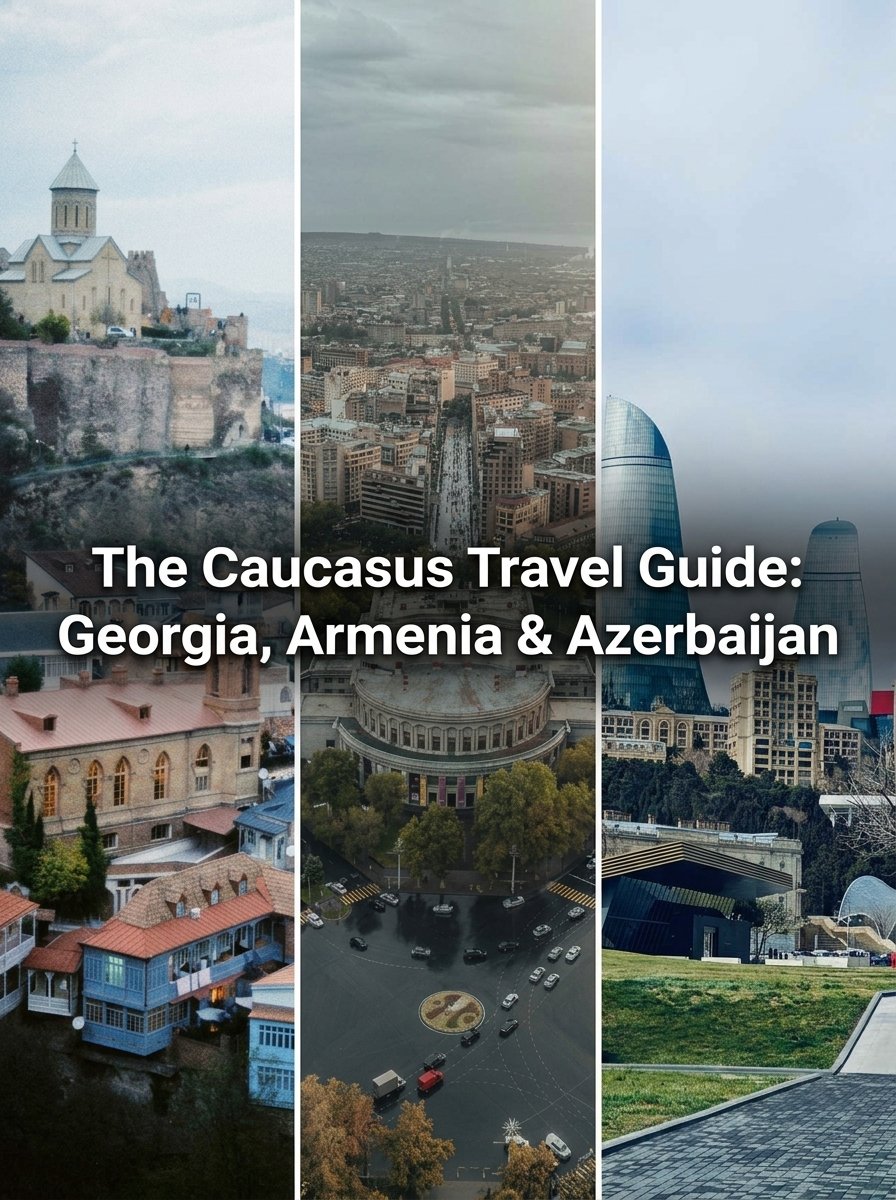
The Caucasus is a mountainous region between Europe and Asia. It includes Georgia, Armenia and Azerbaijan, three countries with different cultures and travel experiences. You can hike through mountain villages in Georgia or explore ancient monasteries in Armenia. Azerbaijan offers modern cities alongside historic Silk Road towns.
But traveling across the Caucasus takes some planning. Each country has different visa rules, and not every land border is open to tourists.
This guide explains when to visit the Caucasus and how much to budget. It also covers transport options and practical routes for visiting more than one country. You will find country comparisons, seasonal advice and travel tips to help you plan a trip that fits your time and budget.
Key Takeaways
| Travel factor | What you should know |
| Best time to visit | May–June and September–October |
| Budget travel | Around $25–$40 per person per day |
| Mid-range travel | Around $45–$85 per person per day |
| Ideal trip length | 7 days for one country or 21 days for all three |
| Best for hiking | Georgia, especially Kazbegi and Svaneti |
| Best for history | Armenia’s monasteries and historic towns |
| Best for city breaks | Baku in Azerbaijan |
| Border restrictions | Armenia–Azerbaijan crossings are closed to ordinary tourists. Azerbaijan also restricts land-border entry. |
Budget figures are approximate planning ranges in US dollars. They are not verified personal travel expenses.
What Is the Caucasus?
The Caucasus lies between the Black Sea and the Caspian Sea. It stretches across a mountainous area where Eastern Europe meets Western Asia.
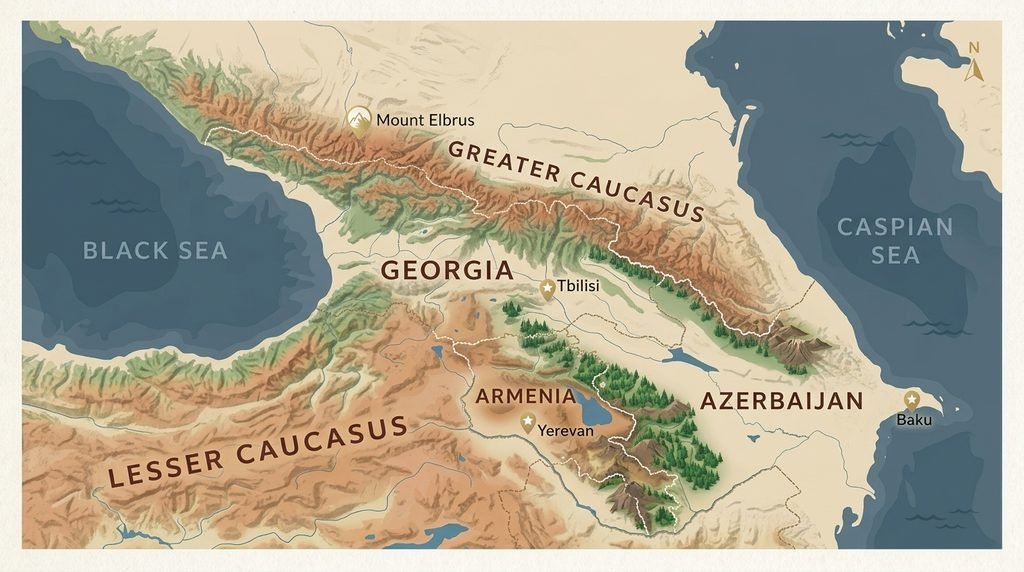
Two mountain ranges shape the region.
- The Greater Caucasus runs across the north, near Russia’s southern border. It includes Mount Elbrus, which reaches 5,642 meters. Georgia’s popular hiking destinations, including Kazbegi and Svaneti, lie within this mountain system.
- The Lesser Caucasus extends through parts of Georgia and Armenia into Azerbaijan. Its landscape includes volcanic highlands and forested valleys.
- The southern part of the region is called the South Caucasus. It includes three independent countries: Georgia, Armenia, and Azerbaijan.
Each country has its own language and history. Their cultures reflect centuries of trade between Europe and Asia as well as the influence of neighboring empires.
How Do Georgia, Armenia and Azerbaijan Compare?
| Feature | Georgia | Armenia | Azerbaijan |
| Capital | Tbilisi | Yerevan | Baku |
| Best for | Hiking and wine | History and monasteries | City breaks and unusual landscapes |
| Currency | Georgian lari (GEL) | Armenian dram (AMD) | Azerbaijani manat (AZN) |
| Main language | Georgian | Armenian | Azerbaijani |
| Travel style | Outdoor adventures | Cultural sightseeing | Urban and cultural travel |
| Popular destination | Kazbegi | Geghard Monastery | Baku Old City |
Georgia vs Armenia vs Azerbaijan: Which Should You Visit?
The best Caucasus country for your trip depends on what you want to experience. Georgia suits outdoor travelers, while Armenia is a strong choice for history. Azerbaijan offers a different experience through Baku and its surrounding attractions.
Who Should Choose Georgia?
Georgia is a good choice if you enjoy mountains and outdoor activities. The country has hiking routes in Kazbegi and Svaneti, where traditional villages sit beneath the Greater Caucasus.
Tbilisi is also worth exploring. You can walk through the Old Town or visit the traditional sulfur baths; if you enjoy wine, head to Kakheti, Georgia’s main wine-producing region.
Georgia works well for a first visit because it offers a mix of city sightseeing and mountain trips.
Who Should Choose Armenia?
Armenia is a good choice if you enjoy ancient history and religious heritage. Many of its best-known monasteries stand in mountain areas outside the main cities.
Visit Geghard Monastery, where parts of the building are carved into rock. Khor Virap is another popular destination, with views of Mount Ararat across the Turkish border.
Yerevan, the capital, has museums and outdoor cafés. Its pink volcanic stone buildings give parts of the city a distinctive appearance.
Who Should Choose Azerbaijan?
Azerbaijan is a good choice if you enjoy modern cities and unusual natural attractions.
Baku sits beside the Caspian Sea. Its Old City has historic walls and narrow streets, while the Flame Towers rise above the modern skyline.
Outside the capital, visit Gobustan to see ancient rock carvings. Nearby mud volcanoes offer another reason to explore beyond Baku.
Can You Visit All Three Countries in One Trip?
Yes, you can visit Georgia, Armenia, and Azerbaijan on the same trip. The trick is to plan your route in the right order. Armenia and Azerbaijan don’t have an open land border for tourists, so you’ll need to travel through Georgia to visit both countries.
The easiest way is to start in Azerbaijan and finish your trip in Armenia.
Here’s how you can plan your journey:
- Fly into Azerbaijan: Start your trip in Baku. Azerbaijan doesn’t normally allow foreign tourists to enter through its land borders, so flying is your best option.
- Head to Georgia: After exploring Baku, make your way towards Sheki and cross into Georgia through the Balakan–Lagodekhi border. Foreign tourists can generally leave Azerbaijan by land.
- Finish in Armenia: Once you’ve explored Georgia, you can travel to Armenia by road. The Sadakhlo–Bagratashen crossing is a common option for travelers coming from Tbilisi.
Can you take the train from Tbilisi to Baku? Even where passenger trains operate, Azerbaijan’s entry rules can limit who can use them to enter the country. If you’re traveling with an Azerbaijani e-visa, plan to fly into Baku instead.
Before setting off, check the latest border rules. Entry restrictions can change, and you don’t want to reach a crossing only to find that you can’t use it.
When Is the Best Time to Visit the Caucasus?
May, June, September, and October are generally the best months to visit the Caucasus. These months offer comfortable weather for many city visits and lower-altitude outdoor activities.
July and August are better for high-mountain hiking, although cities can get very hot.
Caucasus Weather, Crowds and Prices by Month
| Month | Typical weather | Crowds | Prices | Best for | Watch out for |
| January | Cold, snowy mountains | Low* | Low* | Skiing | Icy roads |
| February | Cold | Low* | Low* | Winter sports | Snowfall |
| March | Cool, changeable | Low | Low | City visits | Rain |
| April | Mild | Medium | Medium | Sightseeing | Mountain snow |
| May | Pleasant | Medium | Medium | Road trips | Closed high trails |
| June | Warm | Medium | Medium | Hiking | City heat |
| July | Hot in cities | High | High | Mountain trekking | Peak-season crowds |
| August | Hot in cities | High | High | Alpine hiking | Higher hotel prices |
| September | Warm to mild | Medium | Medium | Hiking and wine | Cooler nights |
| October | Mild to cool | Medium | Medium | Autumn scenery | Early mountain snow |
| November | Cool to cold | Low | Low | City breaks | Shorter days |
| December | Cold | Medium* | Medium* | Ski resorts | Holiday demand |
Winter resort prices can be high, especially around New Year. All crowd and price levels are relative estimates, not measured monthly averages.
Spring in the Caucasus: March to May
Spring is a good time for city sightseeing. March can still be cold, especially in mountain areas.
By April, Tbilisi and Yerevan usually have milder weather. May is often more comfortable for visiting monasteries and exploring wine regions.
However, snow may still block some high mountain routes.
Summer in the Caucasus: June to August
Summer is the main hiking season in Georgia’s Greater Caucasus. Many high-mountain trails become more accessible in July and August.
Kazbegi and Svaneti attract more visitors at this time. Book accommodation early if you plan to hike in popular areas.
Cities can become hot. Yerevan often experiences temperatures above 30°C during summer.
Autumn in the Caucasus: September to November
September is one of the most useful months for a multi-country trip. Many mountain routes remain accessible, while city temperatures become more comfortable.
Georgia’s Kakheti region also enters its grape harvest season, known as rtveli.
October brings autumn colors to forested areas. By November, mountain weather becomes less reliable.
Winter in the Caucasus: December to February
Winter is suitable for skiing and quieter city visits.
Georgia has ski resorts such as Gudauri and Bakuriani. Armenia’s Tsaghkadzor and Azerbaijan’s Shahdag also offer winter sports.
Snow can affect mountain roads. Check conditions before traveling to remote areas.
Which Festivals Can Affect Travel Prices?
Local festivals may increase demand for accommodation and transport. Novruz takes place around March in Azerbaijan. Vardavar is celebrated in Armenia during summer. Georgia’s Tbilisoba festival usually takes place in autumn.
Easter dates vary, while New Year celebrations can increase hotel demand in cities and ski resorts. Check event dates before booking, as some change each year.
How Much Does a Caucasus Trip Cost?
You can explore the South Caucasus on a budget of 25–45 per day if you stay in hostels and use shared minibusses. For a more comfortable trip, expect to spend 50–85 per person per day on private guesthouses, restaurant meals, and a few guided tours. If you prefer boutique hotels and private drivers, plan for around 120–200 or more per day.
Average Daily Costs by Country
| Expense per person | Georgia | Armenia | Azerbaijan |
| Accommodation | $15–$35 | $12–$30 | $20–$45 |
| Food and drink | $10–$18 | $8–$15 | $10–$20 |
| Local transport | $3–$8 | $3–$7 | $3–$10 |
| Activities | $5–$15 | $3–$10 | $5–$15 |
| Estimated daily total | $33–$76 | $26–$62 | $38–$80 |
Note: Baku has far fewer budget hostels than Tbilisi or Yerevan, which pushes Azerbaijan’s minimum daily floor higher. Sharing a double room as a couple significantly lowers per-person accommodation costs across all three countries.
How Much Does Accommodation Cost?
Hostel beds may cost around 10–16 per night. Basic guesthouses and private rooms often start around 20–35.
Hotels in central Tbilisi and Baku can cost more. Mountain accommodation also becomes more expensive during busy hiking months.
If you travel as a couple, sharing a private room can reduce your cost per person.
How Much Should You Budget for Food?
Local restaurants are often affordable. You can usually find a filling meal for under $15, though prices vary by city.
In Georgia, try khinkali dumplings or khachapuri, a traditional cheese-filled bread. Armenia has local bakeries and cafés, while Azerbaijan offers dishes such as plov. Restaurants near major tourist attractions may charge more.
How Much Does Transport Cost?
Public transport is usually cheaper than hiring a private driver. Shared minibusses, called marshrutkas, connect many towns. Fares depend on the route and distance.
Georgia also has passenger trains, including services between Tbilisi and Batumi. Mountain trips can cost more when you need a private vehicle. International flights may add significantly to a three-country itinerary.
How Much Do Activities Cost?
Many historic neighborhoods and mountain viewpoints are free to explore. Museums and historic sites may charge around 3–10. Group day trips can cost 25–45 or more, depending on the destination. Private tours usually cost more, especially when they involve long drives.
How Can You Save Money in the Caucasus?
- Travel outside peak summer: Accommodation may cost less in May or September.
- Use local transport: Shared minibusses can reduce travel costs.
- Stay in guesthouses: Compare local accommodation with larger hotels.
- Eat at local restaurants: Look beyond the busiest tourist streets.
- Compare tour prices: Check whether entrance fees and transport are included.
- Carry local currency: Some smaller businesses prefer cash.
Caucasus Itineraries: How Many Days Do You Need?
Seven days is enough for a short trip to one country. You can visit Georgia and Armenia in around 10–14 days. Allow approximately three weeks if you want to include Azerbaijan.
7 Days: Explore Georgia
A week in Georgia gives you time to see Tbilisi and one nearby region. Spend two days exploring Tbilisi. Then travel to Kazbegi for mountain views and hiking.
Use your remaining days to visit Kakheti or explore more of the capital. If you prefer history, you could spend your week in Armenia instead.
10–14 Days: Georgia and Armenia
Start in Tbilisi and spend several days exploring Georgia. Visit Kazbegi before traveling towards Armenia. Cross through an operating Georgia–Armenia border checkpoint.
Spend the remaining days in Yerevan. From there, visit Geghard Monastery or Lake Sevan. A 14-day trip allows more time for sightseeing than a 10-day route.
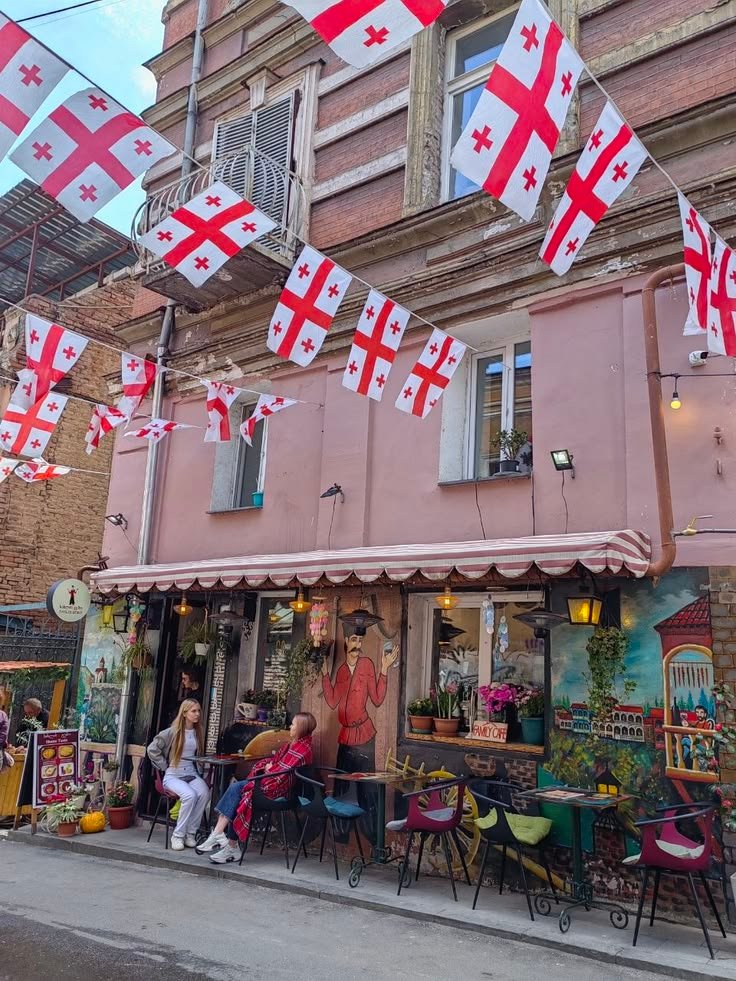
3 Weeks: Georgia, Armenia and Azerbaijan
You can explore Georgia, Armenia, and Azerbaijan in 21 days without rushing. Start in Azerbaijan, travel through Georgia, and finish in Armenia. This route gives you enough time to see the main attractions and enjoy a few quieter days along the way.
- Days 1–5: Azerbaijan: Fly into Baku and explore its Old City. Visit Gobustan’s rock carvings and mud volcanoes before heading to Sheki to see the Khan’s Palace.
- Days 6–14: Georgia: Cross into Kakheti for local wine tasting, then spend a few days in Tbilisi. Head to Kazbegi for mountain views and hiking.
- Days 15–21: Armenia: Cross into Armenia and visit Haghpat and Sanahin monasteries. Explore Yerevan and take day trips to Garni Temple, Geghard Monastery, and Lake Sevan before flying home.
Road Trip vs Public Transport
A rental car gives you more freedom to visit remote areas. It can be useful for mountain villages where public transport is limited. However, mountain roads may be difficult in bad weather. Rental companies can also restrict international border crossings.
Public transport works well between many major cities. For a multi-country trip, combining buses with occasional private transfers may be more practical than hiring one car.
How to Get to and Travel Around the Caucasus?
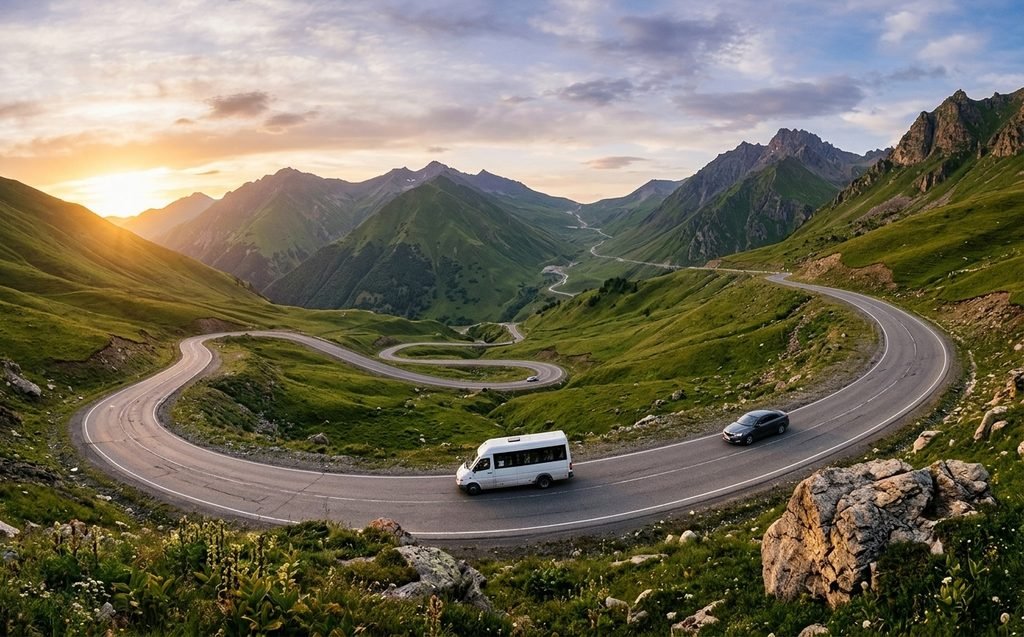
The easiest way to reach the South Caucasus is usually by air. The region has international airports in Georgia and Armenia, while Baku is the main arrival point for Azerbaijan.
Main Airports
| Airport | Country | Best for |
| Tbilisi International Airport (TBS) | Georgia | Tbilisi and eastern Georgia |
| Kutaisi International Airport (KUT) | Georgia | Budget flights and western Georgia |
| Zvartnots International Airport (EVN) | Armenia | Yerevan and central Armenia |
| Heydar Aliyev International Airport (GYD) | Azerbaijan | Baku and eastern Azerbaijan |
Compare flight prices before choosing where to begin your trip. Arriving in one country and departing from another can reduce unnecessary travel.
Border Crossings Between the Countries
Georgia and Armenia have designated land border crossings used by international travelers. The Armenia–Azerbaijan land border is not open for ordinary tourist crossings.
Azerbaijan has also maintained restrictions on passenger travel through its land borders. Check the latest entry and exit rules before arranging transport.
Marshrutkas, Trains and Taxis
Marshrutkas are shared minibusses used across much of the region. They connect cities with smaller towns. Trains operate on selected routes, including Tbilisi to Batumi in Georgia.
Ride-hailing apps such as Bolt are available in some cities. Check which services operate in your destination before arriving.
Regional and Domestic Flights
Domestic flights are limited compared with road transport. Georgia has some air services to mountain areas, although schedules can depend on weather.
Flights between Caucasus countries may require connections. Compare available routes before building your itinerary.
Where Should You Stay in the Caucasus?
The best place to stay depends on your travel plans. Staying near public transport can save time, especially if you plan several day trips.
Where to Stay in Tbilisi?
Tbilisi’s Old Town is convenient for sightseeing. You can walk to many historic attractions and restaurants. Sololaki is another option near the center. If you prefer easy metro access, consider staying near a station.
Where to Stay in Yerevan?
Kentron, the central district, is convenient for first-time visitors. Republic Square and many restaurants are within walking distance. Staying centrally also makes it easier to arrange day trips to nearby attractions.
Where to Stay in Baku?
Baku’s Old City suits visitors who want to explore historic attractions on foot. The area around Fountain Square is another central option, with restaurants and shops nearby. Accommodation farther from the center may cost less, but check transport connections before booking.
Visas, Insurance & Entry Requirements
Entry rules vary sharply across the region, and several borders require strict documentation checks.
Visa & Insurance Overview
| Nationality | Georgia | Armenia | Azerbaijan |
| UK | Visa-free (up to 1 year) | Visa-free (up to 180 days) | ASAN e-Visa required |
| EU / Schengen | Visa-free (up to 1 year) | Visa-free (up to 180 days) | ASAN e-Visa required |
| US | Visa-free (up to 1 year) | Visa-free (up to 180 days) | ASAN e-Visa required |
| India | e-Visa (or visa-free with valid US/UK/Schengen/GCC visa) | e-Visa/VOA with qualifying third-country visa; otherwise embassy visa | ASAN e-Visa eligible |
Important Entry Rules to Know Before You Travel
Before visiting Georgia, Armenia, or Azerbaijan, check each country’s entry rules. A few small details can make a big difference at the border.
- Travel Insurance for Georgia: Foreign visitors must have health and accident insurance covering their stay, with at least 30,000 GEL in coverage. Keep a copy in English or Georgian on your phone or in print.
- Armenia and Azerbaijan Passport Stamps: You can still visit Azerbaijan after traveling to Armenia. However, border officers may ask you a few extra questions about your trip.
- Nagorno-Karabakh Restrictions: Don’t enter the Karabakh region from Armenia without permission from Azerbaijan. Doing so can lead to an entry ban.
- Official Visa Websites: Apply through the official portals to avoid extra fees: Georgia e-Visa, Armenia e-Visa, and Azerbaijan ASAN Visa.
Is the Caucasus Safe for Tourists?
Many established tourist destinations in Georgia and Armenia are suitable for independent travel. Azerbaijan also has popular tourist areas, particularly around Baku. However, safety varies by location. Border areas can present serious risks.
Avoid restricted areas near the Armenia–Azerbaijan border. Also check official advice on other disputed territories before traveling. The North Caucasus, within Russia, has different security concerns from the South Caucasus.
Use the UK Foreign, Commonwealth & Development Office travel advice to check current warnings for each country.
Cards are widely accepted in many hotels and restaurants in major cities. However, smaller businesses may prefer cash. Each country uses a different currency. Georgia uses the lari, Armenia uses the dram, and Azerbaijan uses the manat.
Carry some local currency when visiting rural areas. Check exchange rates and ATM fees before withdrawing money.
Practical Travel Tips: Money, Transport Apps & Packing
A little planning can make traveling through Georgia, Armenia and Azerbaijan much easier. Here are a few things worth knowing before your trip.
- Money and Currency: Georgia uses the lari (GEL), Armenia uses the dram (AMD), and Azerbaijan uses the manat (AZN). Try to spend or exchange leftover cash before crossing borders, as it can be harder to exchange in the next country.
- Transport Apps: Download Bolt and Yandex Go to book rides in major cities. Check which app works at your destination, as availability varies by country.
- Mountain Travel: You can visit Kazbegi year-round, although snow may affect road travel. The road to Tusheti usually opens from June to early October and requires a 4×4.
- Visiting Churches: Dress modestly when entering churches and monasteries. Women may need a scarf to cover their hair, while men should avoid shorts. Carrying a lightweight scarf is a good idea.
Best Things to Do in the Caucasus
The Caucasus has many attractions beyond its capital cities. Some of the most memorable experiences involve visiting mountain areas or exploring historic places.
Mountains and Hiking
Hike Through Svaneti in Georgia
Svaneti is known for its traditional stone towers and mountain villages. The Mestia-to-Ushguli trek is a popular route through the region. Many hikers complete it in around four days.
Visit Kazbegi and Gergeti Trinity Church
Kazbegi offers some of Georgia’s best-known mountain scenery. Gergeti Trinity Church stands above Stepantsminda, with Mount Kazbek visible in clear weather.
Ride the Tatev Cable Car in Armenia
The Wings of Tatev cable car crosses a deep valley to Tatev Monastery. The journey offers views of the surrounding mountains.
Explore Gobustan in Azerbaijan
Gobustan is known for ancient rock carvings. Nearby mud volcanoes are another popular attraction.
History and Culture
Visit Ancient Armenian Monasteries
Geghard Monastery is partly carved into rock. Khor Virap offers views towards Mount Ararat.
Explore Baku’s Old City
Baku’s Old City is a UNESCO World Heritage Site. Walk through its narrow streets and explore historic buildings.
Discover Sheki’s Silk Road History
Sheki has historic caravanserais and traditional craft workshops. Khan’s Palace is known for its colorful decorative windows.
Relax in Tbilisi’s Sulfur Baths
The Abanotubani district has traditional bathhouses supplied with mineral-rich water. Some offer private rooms that you can book in advance.
Food and Local Experiences
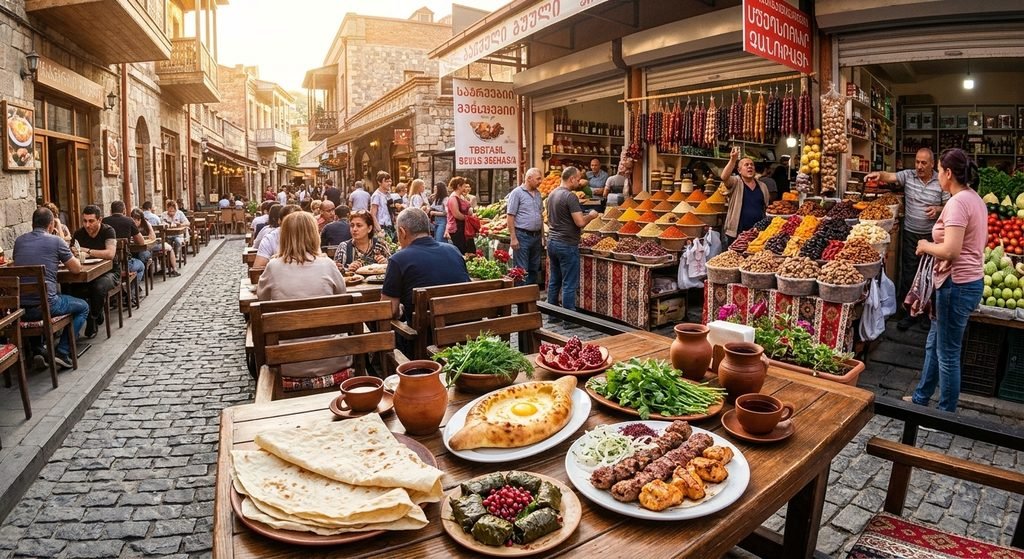
Taste Georgian Wine in Kakheti
Kakheti is Georgia’s main wine region. Visit a winery to learn about traditional qvevri wine-making.
Learn How Armenian Lavash Is Made
Lavash is a traditional flatbread baked in a clay oven called a tonir. Some local cooking experiences demonstrate the process.
Try Georgian Food
Khinkali dumplings and khachapuri are two popular Georgian dishes. You can find them in restaurants across the country.
FAQs
How Many Days Do You Need in the Caucasus?
Allow seven days for one country. You’ll need ten to fourteen days for Georgia and Armenia. Plan for about three weeks for all three countries, especially if border restrictions affect transport.
Which Caucasus Country Is the Cheapest?
Armenia is often affordable for budget travelers, followed by Georgia. Azerbaijan may cost more, particularly in Baku. Actual costs depend on accommodation choices and transport.
Can You Travel Overland Between Georgia, Armenia and Azerbaijan?
You can travel overland between Georgia and Armenia through designated crossings. Direct travel between Armenia and Azerbaijan is not available to ordinary tourists. Azerbaijan also restricts land-border entry.
What Is the Best Month to Visit the Caucasus?
September is a good choice for many travelers. The weather is often comfortable for sightseeing, while mountain routes may remain accessible. May and June are also popular months.
Do You Need a Visa for the Caucasus?
Visa requirements depend on your nationality. Georgia and Armenia offer visa-free entry to many visitors. Azerbaijan has an e-visa system for eligible nationalities.
Is the Caucasus Good for Solo Travelers?
Yes, many visitors explore the South Caucasus independently. Guesthouses and organized day trips can make travel easier. Check current safety advice before visiting remote areas.
Is English Widely Spoken in the Caucasus?
English is common in some tourist businesses in major cities. It is less widely spoken in rural areas. A translation app can make communication easier.