



You’ve just landed in Georgia and your first expense is a taxi ride from the airport. Should you withdraw cash, exchange your dollars or pay with your bank card? These small decisions can make a surprising difference to your travel budget.
The official currency in Georgia is the Georgian Lari (GEL). Card payments are widely accepted in cities like Tbilisi and Batumi, but things work differently in remote villages across the Caucasus. You may struggle to find an ATM or find that your guesthouse accepts only cash.
Unfavorable exchange rates and foreign transaction fees can eat into your travel budget without you noticing. Restaurant service charges can also make tipping confusing.
This guide explains where to exchange money in Georgia, how to avoid unnecessary ATM fees and when to carry cash. It also covers local tipping customs to help you manage your money confidently throughout your trip.
What Currency Is Used in Georgia?
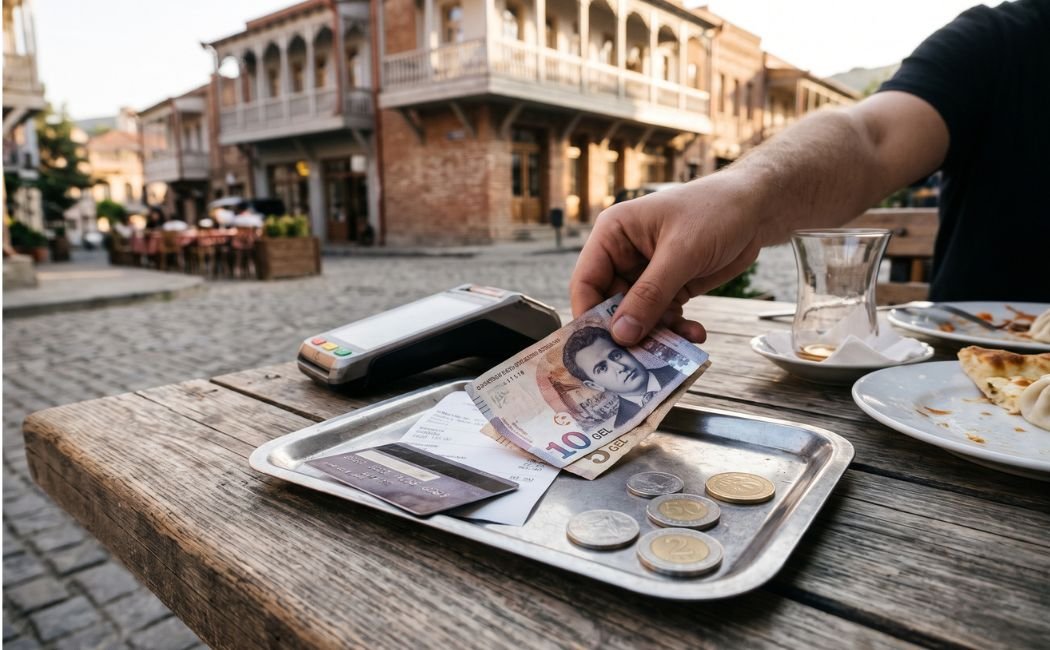
Georgia uses the Georgian Lari (GEL), represented by the symbol ₾. You’ll see this symbol on restaurant menus and price tags throughout the country. The smaller unit is called tetri, with 100 tetri making one Lari.
Georgian Banknotes and Coins
Getting familiar with Georgian money makes everyday transactions much easier, particularly when shopping at local markets or buying bus tickets.
| Currency type | Denominations |
| Banknotes | 5, 10, 20, 50, 100 and 200 GEL |
| Tetri coins | 5, 10, 20 and 50 tetri |
| Lari coins | 1 and 2 GEL |
Georgia withdrew its 1- and 2-tetri coins from circulation on January 1, 2021. Cash payments are rounded to the nearest 5 tetri, while electronic payments do not require this cash rounding.
Should You Carry Georgian Lari in Cash?
You can pay by card at many businesses in Tbilisi and Batumi. Contactless payments are also common in urban areas.
Things are different in the Caucasus mountains. Small guesthouses and roadside vendors may only accept cash. Withdraw enough Lari before heading into remote regions such as Svaneti or Tusheti, where access to ATMs can be limited.
Where Is the Best Place to Exchange Money in Georgia?
Local currency exchange offices often offer competitive rates in Georgia. You’ll find plenty of them around Freedom Square and Rustaveli Avenue in Tbilisi. Batumi and Kutaisi also have exchange offices throughout their central districts.
Don’t settle for the first rate you see. Even neighboring exchange offices can offer different amounts for the same foreign currency.
Local Currency Exchange Offices
Registered exchange offices are a convenient option for converting US dollars or euros into Georgian Lari. They must display their buying and selling rates alongside any applicable commission.
Some advertise zero commission, but that doesn’t necessarily mean you’re getting the best deal. Ask how much Lari you’ll receive before handing over your money.
Keep your transaction receipt. If the exchange transaction does not exceed 5,000 GEL or its foreign currency equivalent, you can request cancellation within 30 minutes of receiving your receipt. You’ll need to present the original receipt to the exchange office.
Georgian Banks
Bank of Georgia and TBC Bank provide currency exchange services. A bank may be a more suitable choice if you’re exchanging a large amount or dealing with a less common foreign currency.
Bring your passport, as you may need it for identification. Bank exchange rates can sometimes be less competitive than those offered by independent exchange offices.
Airports and Hotels
Need cash immediately after landing? Exchange enough to cover your airport transfer and initial expenses. Airport and hotel exchange rates may be less favorable than those available in city centers.
Avoid unofficial street money changers altogether.
Tips for Getting Better Exchange Rates in Georgia
- Bring US dollars or euros, as both currencies are widely accepted for exchange.
- Carry clean and undamaged foreign banknotes.
- Compare exchange rates at several registered offices.
- Confirm whether any commission applies before exchanging money.
- Keep your transaction receipt.
- Carry smaller Lari denominations for everyday purchases.
- Choose GEL when an ATM offers to convert your withdrawal into your home currency.
Is Georgia a Cash or Card Country?
Georgia is a mix of both. You can comfortably use a bank card for most purchases in major cities, but carrying cash becomes more important as you travel deeper into the Caucasus mountains.
Where Can You Pay by Card in Georgia?
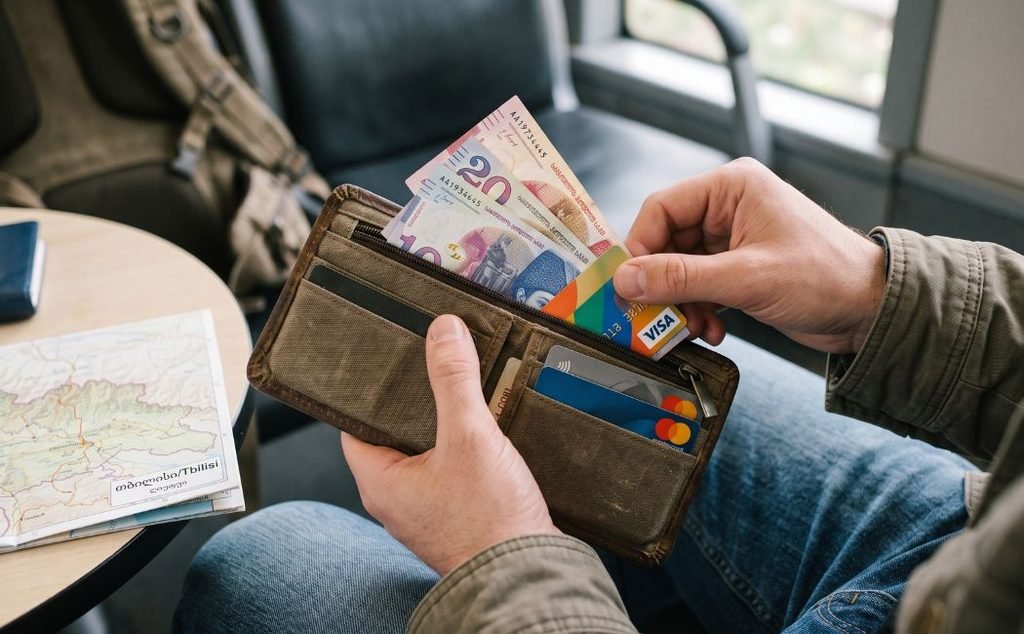
Card payments are common in Tbilisi, Batumi and Kutaisi. Most established businesses accept Visa and Mastercard, and many locations offer contactless payments.
You can generally use your card at hotels, supermarkets, shopping centers and established restaurants. Some businesses also accept mobile payments through Apple Pay or Google Pay.
Where Do You Need Cash in Georgia?
Don’t expect the same payment facilities outside major cities. A family-run guesthouse in Svaneti may only accept cash, and finding an ATM nearby isn’t always easy.
Keep Georgian Lari handy when paying for:
- Local markets and roadside vendors.
- Marshrutkas (shared minibuses).
- Small guesthouses in rural areas.
- Local taxis without card payment facilities.
- Small purchases in mountain villages.
- Entrance fees at certain tourist attractions.
Cash vs. Card Payments Across Georgia
| Destination | Recommended payment method |
| Tbilisi | Card with backup cash |
| Batumi | Mostly card |
| Kutaisi | Cash and card |
| Kazbegi | Cash and card |
| Kakheti | Card in larger towns; cash in villages |
| Svaneti | Carry sufficient cash |
| Tusheti | Cash is strongly recommended |
If you’re planning a road trip through the Georgian Caucasus, withdraw enough money before leaving a major town. A working card is of little use when the nearest ATM is miles away or the local payment terminal has no internet connection.
Can You Use Foreign Debit and Credit Cards in Georgia?
Yes, most international debit and credit cards work in Georgia, particularly those operating on Visa, Mastercard, or American Express, and you can pay for your hotel or restaurant bill without visiting a currency exchange office every time you run out of Lari.
However, acceptance depends on your card network and where you travel.
Which International Cards Are Accepted in Georgia?
| Card network | Acceptance in Georgia |
| Visa | Widely accepted |
| Mastercard | Widely accepted |
| American Express | Limited acceptance |
| Discover | Rarely accepted |
| UnionPay | Accepted at selected merchants and ATMs |
| Mir | Generally not supported |
Visa and Mastercard cards issued by Russian banks generally do not work outside Russia because international network services are suspended.
Do Apple Pay and Google Pay Work in Georgia?
Mobile payments are common in larger cities such as Tbilisi and Batumi. If your foreign bank card supports Apple Pay or Google Pay, you can generally use it at compatible contactless payment terminals.
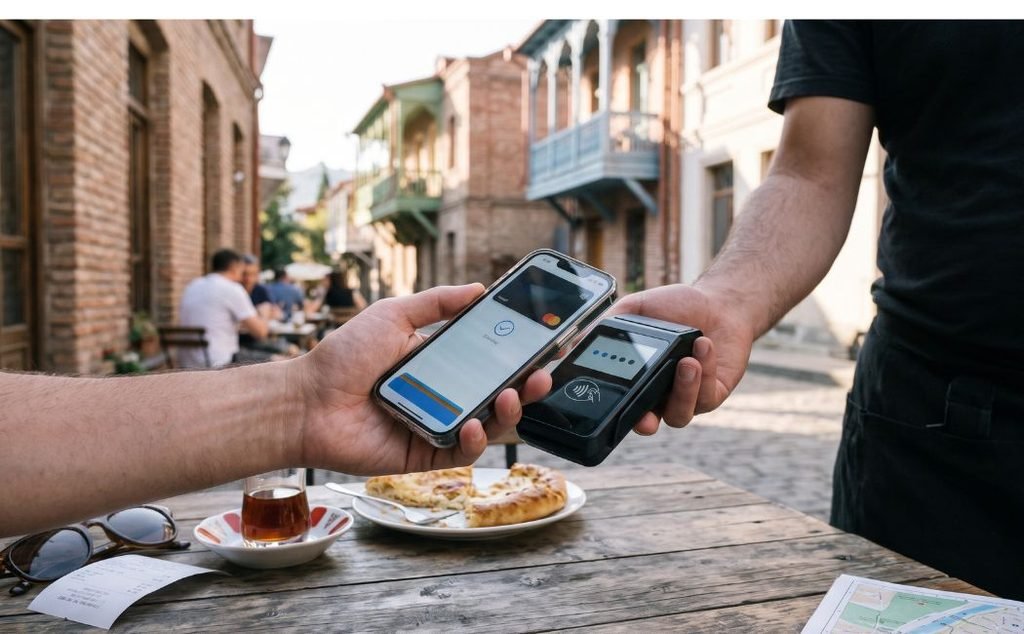
However, don’t rely entirely on your phone for payments. Carry a physical bank card and some cash when exploring remote parts of the Caucasus.
How Much Does It Cost to Use a Foreign Card in Georgia?
Some international bank cards charge a foreign transaction fee of around 1–3%, while others offer overseas purchases without additional fees. The amount depends on your card issuer and account conditions.
Cash withdrawals may also involve a separate fee from the Georgian ATM operator. Check your bank’s international payment charges before you leave, especially if you’re planning a longer trip through the Caucasus.
Should You Pay in Georgian Lari or Your Home Currency?
Choosing Georgian Lari (GEL) is generally the better option. Some payment terminals offer to convert your purchase into your home currency through a service called Dynamic Currency Conversion (DCC).
The convenience comes at a potential cost. DCC may include an exchange rate markup or additional fees. Paying in GEL allows your card issuer to handle the conversion instead although your bank may still charge foreign transaction fees.
What Should You Do If Your Card Is Declined in Georgia?
Check whether your bank has enabled international transactions. Your card issuer may temporarily block overseas payments if it detects unusual activity.
Consider carrying a second card from a different bank. This is particularly useful when traveling through the Caucasus, where resolving banking problems from a remote mountain village can be difficult.
How Much Cash Should You Carry in Georgia?
A daily cash budget of around 100–130 GEL may be reasonable if you expect to pay for most everyday expenses in cash. However, you’ll probably need much less if you’re staying in Tbilisi and paying for meals or accommodation by card.
Your itinerary matters more than the length of your holiday.
How Much Cash Do You Need in Georgian Cities?
Card payments are widely accepted in Tbilisi, Batumi and Kutaisi. You don’t need to carry your entire holiday budget in cash.
Keep smaller denominations of Lari available for expenses such as:
- Local minibusses and street vendors.
- Fresh produce at farmers’ markets.
- Tips for hotel staff and restaurant servers.
- Public restrooms, which may cost around 0.50–1 GEL.
- Purchases at small family-run shops.
How Much Cash Do You Need in the Caucasus Mountains?
If you’re heading to Svaneti or Tusheti, prepare a larger cash reserve. Some mountain guesthouses and independent drivers may not accept card payments.
An additional cash reserve of 300–500 GEL may be useful for a mountain trip, depending on your planned expenses and access to banking facilities. Confirm accommodation and transport costs before leaving a major town.
Should You Carry All Your Travel Money in Cash?
No. ATMs are readily available in major Georgian cities, so you can withdraw more money as needed. Carry a backup bank card and keep your emergency cash separate from your everyday spending money.
If you’re bringing a substantial amount into Georgia, remember that cash exceeding 30,000 GEL or its equivalent in foreign currency must be declared at customs.
The suggested cash amounts are budgeting estimates, not fixed requirements. Adjust them according to your destination and planned expenses.
How Much Money Do You Need per Day in Georgia?
A daily budget of around 90–380 GEL per person can cover many budget and mid-range trips in Georgia. Your actual expenses depend on where you stay and how you get around. Exploring Tbilisi by metro will generally cost less than hiring a private driver to visit remote Caucasus villages.
Estimated Daily Travel Budget in Georgia
| Travel style | Daily budget | What to expect |
| Budget | 90–160 GEL | Hostels, affordable local food and public transport |
| Mid-range | 200–380 GEL | Comfortable accommodation with restaurant meals and occasional tours |
| Luxury | 500–700+ GEL | Upscale accommodation and private transport with premium experiences |
These estimates cover typical daily travel expenses but exclude international flights. Your per-person accommodation costs may be lower when sharing a room.
How Much Do Everyday Expenses Cost in Georgia?
Having an idea of local prices can help you decide how much money to withdraw or exchange during your trip.
| Expense | Estimated cost |
| Hostel dorm or basic guesthouse | 30–80 GEL per night |
| Comfortable hotel room | 120–250+ GEL per night |
| Khachapuri | 3–15 GEL |
| Glass of Georgian wine | 5–10 GEL |
| Restaurant meal | 20–80 GEL per person |
| Tbilisi metro | Standard fare of 1 GEL for 90 minutes |
| Intercity minibus | Around 2–35 GEL, depending on the route |
Additional Expenses for Caucasus Road Trips
Leave some room in your budget if you’re heading into the mountains. Reaching remote destinations such as Svaneti or Tusheti may require specialized transport, which can significantly increase your daily expenses.
If you’re renting a car, remember to budget separately for fuel and parking. Accommodation prices may also rise during busy travel seasons.
These prices are approximate travel planning estimates for November 2026. Actual costs vary depending on your destination and travel arrangements.
Is Tipping Expected in Georgia?
Tipping is voluntary in Georgia, although it is appreciated and has become customary in some restaurants and tourism-related services. Leaving around 10–15% for good service is generally considered appropriate.
Before reaching for your wallet, check whether a service charge is already included in your bill.
How Much Should You Tip in Georgia?
| Service | Suggested tip |
| Restaurants and cafes | Around 10–15% for good service if no service charge is included |
| Fast food outlets and bakeries | Optional small change |
| Taxi and ride-hailing drivers | Round up the fare or leave a few Lari |
| Tour guides and private drivers | Around 10–15%, depending on the service |
| Hotel porters | A few Lari for assistance |
| Hotel housekeeping | A small voluntary tip |
Understanding Restaurant Service Charges
Some Georgian restaurants automatically add a service charge to the bill, often around 10–15%, though the percentage varies by establishment. You may see the Georgian word მომსახურება (service) on your receipt.
Don’t confuse a service charge with VAT, which is a separate tax.
If a service charge is already included, you’re not obligated to leave an additional tip. However, you can still give something extra if the service was particularly good.
Is It Better to Tip in Cash or by Card?
Cash is often more convenient for tipping in Georgia. Keep a few small Lari notes or coins handy, especially when visiting family-run guesthouses in the Caucasus mountains.
Some card terminals may not offer a tipping option. Leaving cash also allows you to hand the tip directly to the person who helped you.
How Much Money Can You Bring Into Georgia?
Georgia does not generally impose a maximum limit on the amount of cash you can bring into the country. However, carrying a large sum comes with customs declaration obligations.
If you’re traveling across the Caucasus with cash in several currencies, remember that customs officers consider their combined value rather than treating each currency separately.
Georgia’s Cash Declaration Rules
You must declare money exceeding 30,000 GEL or its equivalent in foreign currency when entering or leaving Georgia. This requirement also covers cheques and other applicable securities.
For example, if you’re carrying US dollars and euros alongside Georgian Lari, their total equivalent value determines whether you need to declare.
How to Declare Money at the Georgian Border
If you’re carrying more than the permitted undeclared amount, inform customs officers when crossing the border. At airports, use the red customs channel and complete the required declaration form.
Keep supporting documents showing the source of your funds, as customs authorities may request them.
What Happens If You Fail to Declare Cash?
Under Article 169 of Georgia’s Customs Code, failing to declare cash or applicable securities correctly can result in financial penalties or confiscation.
| Value involved | Possible penalty |
| More than 30,000 GEL and up to 50,000 GEL | Fine of 3,000 GEL or confiscation |
| More than 50,000 GEL and up to 100,000 GEL | Fine of 5,000 GEL or confiscation |
| More than 100,000 GEL | Fine of 10% of the relevant value or confiscation |
The rules apply when entering or leaving Georgia. If you’re unsure whether your money needs to be declared, speak to a customs officer before crossing the border.
Can You Take Georgian Lari Out of the Country?
Yes, you can take Georgian Lari out of Georgia. The same declaration threshold applies when leaving the country.
If you’re continuing your journey through Armenia or Azerbaijan, check their currency declaration rules separately. Customs regulations vary across the Caucasus.
Is It Safe to Carry Cash and Use ATMs in Georgia?
Yes, carrying cash and withdrawing money from ATMs is generally safe in Georgia. However, petty theft can occur in crowded markets or busy tourist areas. Taking a few precautions can help protect your money throughout your trip.
How to Use ATMs Safely in Georgia
You’ll find ATMs operated by Bank of Georgia and TBC Bank throughout major cities. Other banks, such as Liberty Bank and Basisbank, also provide cash withdrawal facilities.
Keep the following precautions in mind when withdrawing money:
- Use ATMs inside bank branches or well-lit shopping centers.
- Inspect the card slot and keypad for signs of tampering.
- Cover the keypad when entering your PIN.
- Choose GEL instead of your home currency to avoid unnecessary conversion charges.
- Check the withdrawal fee before confirming the transaction.
- Enable banking notifications to monitor your transactions.
Local ATM fees vary by operator and card type. Your card issuer may also apply separate international withdrawal or currency conversion charges. Review the fees displayed on the ATM screen before completing your transaction.
How to Keep Your Cash Safe in Georgia
You don’t need to carry your entire travel budget whenever you leave your hotel. Around 100–200 GEL may be enough for everyday expenses in Tbilisi, particularly if you pay for larger purchases by card.
Keep your backup bank card separate from your main wallet. Store any additional cash in a secure place at your accommodation.
Prepare Before Traveling Into the Caucasus Mountains
Finding an ATM in central Tbilisi is easy. Finding one in a remote mountain village is another matter.
ATM access can be extremely limited in Tusheti and Ushguli, along with remote parts of Khevsureti. Withdraw enough Lari in larger towns such as Mestia or Telavi before continuing your journey.
Confirm whether your guesthouse accepts cards before arrival. It is better to have some cash left over than to reach a remote destination without enough money to pay for accommodation or transport.
Managing Your Money When Traveling Across the Caucasus
Money management becomes a little more complicated when your trip involves multiple Caucasus countries. Each country has its own currency, and payment facilities vary considerably between capital cities and remote mountain settlements.
The card you use for dinner in Tbilisi may not be useful at a small guesthouse in rural Armenia.
Currency and Payment Methods Across the Caucasus
| Country | Official currency | Card acceptance | Where cash is useful |
| Georgia | Georgian Lari (GEL) | Widely accepted in major cities | Mountain guesthouses, local markets and minibuses |
| Armenia | Armenian Dram (AMD) | Common in Yerevan and larger towns | Rural shops, traditional markets and regional transport |
| Azerbaijan | Azerbaijani Manat (AZN) | Common in Baku and established businesses | Smaller shops, rural settlements and local markets |
Exchanging Money Before Crossing International Borders
Don’t expect to spend Georgian Lari in Armenia or Azerbaijan. Each country uses its own national currency, and exchanging leftover regional currencies outside their home countries can be difficult.
Spend or exchange any excess Lari before leaving Georgia. Keeping some US dollars or euros as backup funds may also come in handy during a multi-country trip.
Practical Money Tips for Traveling Across the Caucasus
- Pay in local currency: Choose GEL in Georgia, AMD in Armenia and AZN in Azerbaijan when a payment terminal offers currency conversion.
- Carry emergency cash: Keep some clean US dollar or euro banknotes separate from your main wallet.
- Choose a travel-friendly bank card: Look for a debit card with low international transaction fees and favorable ATM withdrawal conditions.
- Withdraw cash before visiting remote areas: Banking facilities can be limited in isolated mountain settlements.
- Check customs requirements: Each Caucasus country has its own currency declaration rules.
- Confirm payment arrangements: Ask your accommodation provider or private driver whether they accept cards before arrival.
A combination of local cash and international bank cards gives you greater flexibility throughout the Caucasus. Relying entirely on one payment method could leave you struggling to cover basic expenses when traveling away from major cities.
Common Money Mistakes to Avoid in Georgia
Managing money in Georgia is fairly simple once you understand how local payments work. However, small mistakes can add unnecessary costs to your holiday, particularly when traveling through remote parts of the Caucasus.
- Exchanging all your money at the airport: Airport exchange offices may offer less favorable rates than those in central Tbilisi. Exchange only enough to cover your immediate expenses and compare rates in the city.
- Accepting dynamic currency conversion: When an ATM or payment terminal offers to charge you in your home currency, choosing GEL will generally help you avoid unfavorable conversion markups.
- Relying entirely on bank cards: Card payments are common in Tbilisi and Batumi, but smaller businesses in Svaneti and Tusheti may only accept cash.
- Carrying large banknotes: A street vendor may struggle to provide change for a 100 or 200 GEL note. Keep some 5 GEL and 10 GEL notes for smaller purchases.
- Ignoring ATM withdrawal fees: Even established banks may charge fees for foreign cards. Check the amount displayed on the screen before confirming your withdrawal.
- Making frequent small withdrawals: If your bank charges a fixed fee per transaction, repeated withdrawals can become expensive. Plan your cash needs in advance.
- Forgetting to check restaurant bills: Some restaurants include a service charge. Check your receipt before leaving an additional tip.
- Carrying too much leftover Lari across borders: Georgia’s currency is not generally accepted for everyday payments in Armenia or Azerbaijan. Exchange or spend excess Lari before leaving the country.
Georgia Travel Money Checklist
Before leaving for Georgia, take a few minutes to organize your travel money. Having the right payment options can save you from unnecessary banking fees or cash shortages, especially when exploring the Caucasus mountains.
Currency and Cash Preparation
- Familiarize yourself with the Georgian Lari (GEL) and its denominations.
- Check the latest exchange rate before departure.
- Bring clean US dollar or euro banknotes if you intend to exchange cash.
- Exchange only enough money at the airport to cover your initial expenses.
- Keep smaller denominations, particularly 5 and 10 GEL notes.
Bank Cards and ATM Withdrawals
- Check whether your bank card supports international transactions.
- Review your bank’s foreign transaction and ATM withdrawal fees.
- Carry a backup Visa or Mastercard.
- Use ATMs operated by established Georgian banks.
- Select GEL when an ATM or payment terminal offers currency conversion.
Preparing Money for Different Destinations
- Keep around 100 GEL for smaller daily expenses when exploring Tbilisi or Batumi.
- Withdraw sufficient cash before heading into Svaneti or Tusheti.
- Confirm whether your accommodation and private driver accept card payments.
- Keep emergency cash separate from your main wallet.
- Exchange excess Georgian Lari before traveling to another Caucasus country.
Remember to check currency declaration requirements if you’re carrying a large amount of cash across international borders. A little financial preparation before departure can make your journey much easier.
Frequently Asked Questions
What is the best currency to take to Georgia?
US dollars and euros are widely accepted at Georgian currency exchange offices. However, you should convert them into Georgian Lari (GEL) for everyday purchases.
Can I use Wise or Revolut cards in Georgia?
Yes, Wise and Revolut cards generally work at compatible ATMs and payment terminals throughout Georgia. Check your account’s withdrawal limits and international transaction fees before traveling.
Can tourists exchange money without a Georgian bank account?
Yes, tourists can exchange foreign currency at registered exchange offices without opening a local bank account. Some providers may request a passport or identification document.
Can I pay for public transportation with a foreign bank card?
Tbilisi’s metro and municipal buses accept compatible contactless bank cards. Foreign cards may incur additional charges, so consider purchasing a Metromoney card for regular travel around the city.
Are there any fee-free ATMs in Georgia?
ATM fees in Georgia depend on the operator and your card issuer. Some withdrawals may be fee-free but always check the displayed charges before confirming your transaction.
Can I exchange leftover Georgian Lari before leaving?
Yes, banks and registered currency exchange offices can convert unused Georgian Lari into foreign currency. Compare exchange rates in the city before heading to the airport.
Can I use Georgian Lari in neighboring Caucasus countries?
Generally, no. Armenia uses the Armenian Dram (AMD), while Azerbaijan uses the Azerbaijani Manat (AZN). Exchange your remaining Lari before continuing your journey across the Caucasus.